- Posted on
- • SEO
Google's ccTLD Removal: What Actually Changed for SEO in 2026
- Author
-
-

- User
- techub.digital editors
- Posts by this author
- Posts by this author
-
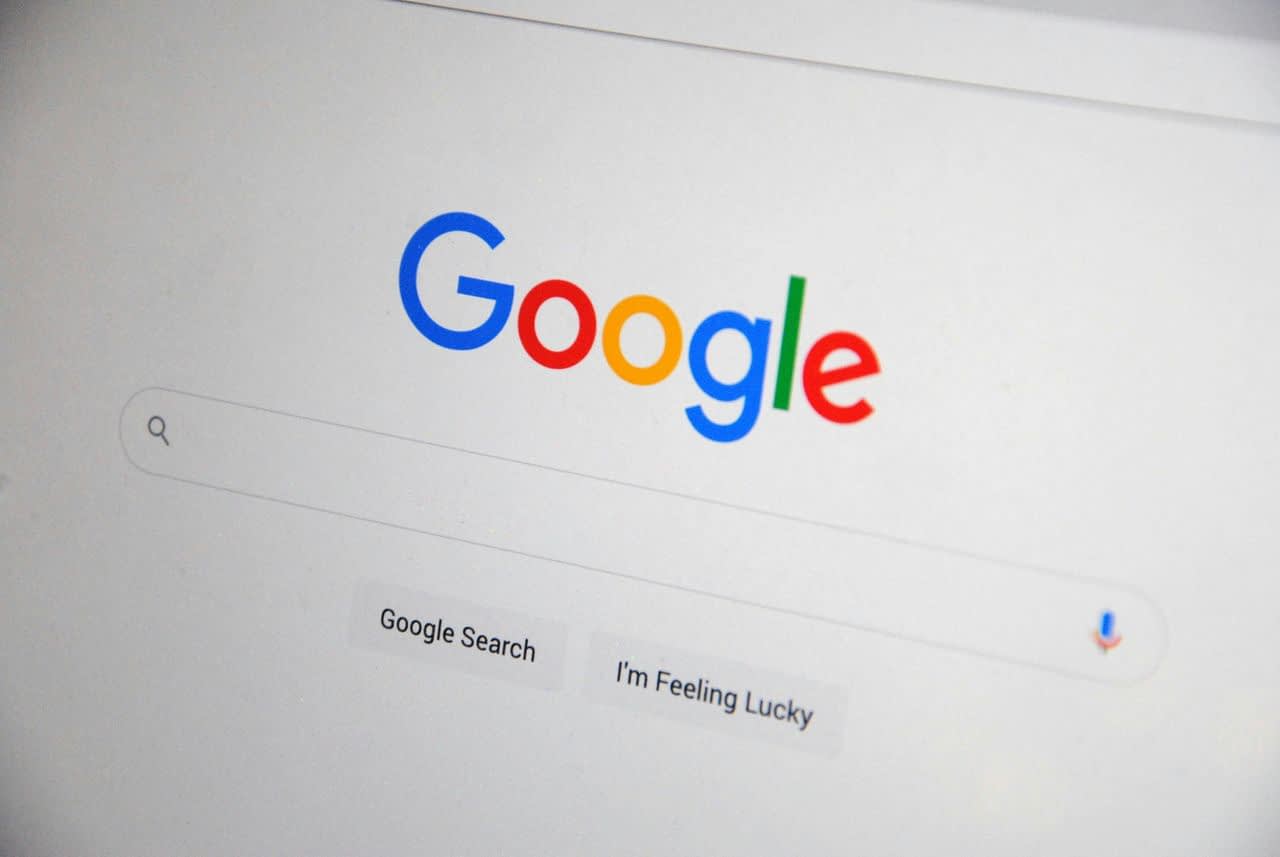
In April 2025, Google quietly made it official: country-specific Google domains are going away. If you typed google.fr in France or google.co.uk in the UK, you now land on google.com instead.
The SEO community immediately lit up with questions. Does this mean ccTLDs are losing their ranking power? Should you migrate to .com? Is local SEO about to get harder?
Short answer: less changed than the headlines suggested. But there is still something worth understanding here, especially if you are running a multi-country site or tracking rankings by country.
What Google actually changed (and what it did not)
The change is about Google's own domains, not yours.
Since 2017, Google has been delivering localized search results based on where you are physically located, not based on which Google domain you typed into your browser. If you were in Germany and used google.com, you already got German results. The country-specific domains had essentially become redundant.
Google confirmed this in their official announcement: "Because of this improvement, country-level domains are no longer necessary. So we'll begin redirecting traffic from these ccTLDs to google.com to streamline people's experience on Search."
Critically, they also said: "It's important to note that while this update will change what people see in their browser address bar, it won't affect the way Search works."
Your .com.br, your .de, your .co.uk: none of that changed. The removal is about google.fr going away, not about how Google evaluates your domain.
What ccTLDs actually do for SEO (the honest picture)
This distinction matters because there is a lot of conflation happening in the coverage of this update.
ccTLDs on your site still carry a geographic signal. Google's own documentation is clear: "By default, most ccTLDs result in Google using these to geotarget the website; it tells us that the website is probably more relevant in the appropriate country."
Gary Illyes from Google's Search team confirmed this signal is real, if modest: a .de domain gives you a slight boost in Germany. Martin Splitt reinforced it in 2024: if you are targeting a specific country and can afford it, a ccTLD is generally helpful.
The signal is geographic, not global. A .de helps you in Germany. It does nothing for you in Canada, and it can actively work against you when trying to rank in other markets.
As name.com puts it: "Domain extensions don't directly affect SEO rankings, but they can influence user trust, click-through rates, and backlinks, all of which impact SEO indirectly."

The SEO tracking problem nobody talks about
Here is something more practical that did change: rank tracking.
Before the removal, many SEO tools tracked rankings separately by Google domain. google.de gave you German results, google.fr gave you French results. Some platforms used those country-specific endpoints to pull localized data.
Advanced Web Ranking documented this directly: with everything redirecting to google.com, the way rank trackers identify country-specific results has had to adapt. If you noticed ranking fluctuations or gaps in country-level data around mid-2025, this technical shift is a likely explanation rather than an actual ranking change.
If you use rank tracking software, check whether your provider has updated its crawling methodology to account for this. Most major platforms have already adjusted, but it is worth confirming.
The gccTLD question (.io, .ai, .co)
A quick note on extensions that sit in a gray zone.
Google has a category it calls gccTLDs: country codes that became so widely adopted outside their home country that Google now treats them as generic. The main ones are .io (British Indian Ocean Territory), .ai (Anguilla), and .co (Colombia).
These behave like .com for SEO purposes. No automatic geographic association, no geo-targeting by default. The ranking behavior is neutral.
The one caveat worth knowing: .io carries a long-term registry risk. The British Indian Ocean Territory is subject to an ongoing territorial dispute, and ICANN's handling of decommissioned ccTLDs is uncertain. It has not been a problem yet, but it is a real consideration for businesses building long-term brand equity on that extension.
What this means if you are running a multi-country site
The more important conversation is not about Google's own domains. It is about whether ccTLDs are still a smart strategy for international expansion.
Thomas Rosenstand, Director of SEO at Vaekst Digital, put it well: Google's announcement "is solely concerning their own sites," and website owners do not need to follow suit for international targeting strategies.
Still, the ccTLD-per-country model has real costs:
Authority fragmentation. Running example.de, example.fr, and example.es as separate domains means building three separate authority stacks from zero. Under one .com with /de/, /fr/, /es/ subfolders, that authority compounds over time.
Management overhead. Multiple domains, multiple renewal deadlines, multiple hosting setups. For a small team, this adds up fast.
Market-specific trust still matters. Research shows users in Germany, the UK, and Brazil still show higher click-through rates on local domain extensions. Heroes of Digital noted that while Google no longer needs its own ccTLDs to deliver local results, "your .sg domain still helps — it just shouldn't be your only signal."
The practical answer: if you are a local business serving one country, keep the ccTLD. If you are scaling internationally, consolidating under .com with proper hreflang implementation and localized subfolders is the cleaner long-term play.
What to actually do right now
If you use a ccTLD for a single market: nothing changes. Keep it, keep your localization strong, and make sure hreflang is set correctly if you serve multiple languages.
If you track rankings by country: confirm with your rank tracking provider that their methodology has been updated post-ccTLD removal. Some tools updated automatically, others required configuration changes.
If you are thinking about expanding internationally: resist the temptation to buy a ccTLD for every new market. Start with subfolders (/br/, /de/) on your main .com, build authority in one place, and add hreflang as you go. You can always migrate to separate ccTLDs later if market-specific trust becomes a meaningful conversion factor.
Want to compare domain prices before you register?
Primary Keywords: does google cctld removal affect seo, how cctld removal affects seo, seo tracking after cctld removal, gcctld, gtld vs cctld 2026, domain extension SEO impact