- Posted on
- • Domains
ccTLD vs gTLD SEO: Does Your Domain Extension Actually Matter? (2026)
- Author
-
-

- User
- techub.digital editors
- Posts by this author
- Posts by this author
-
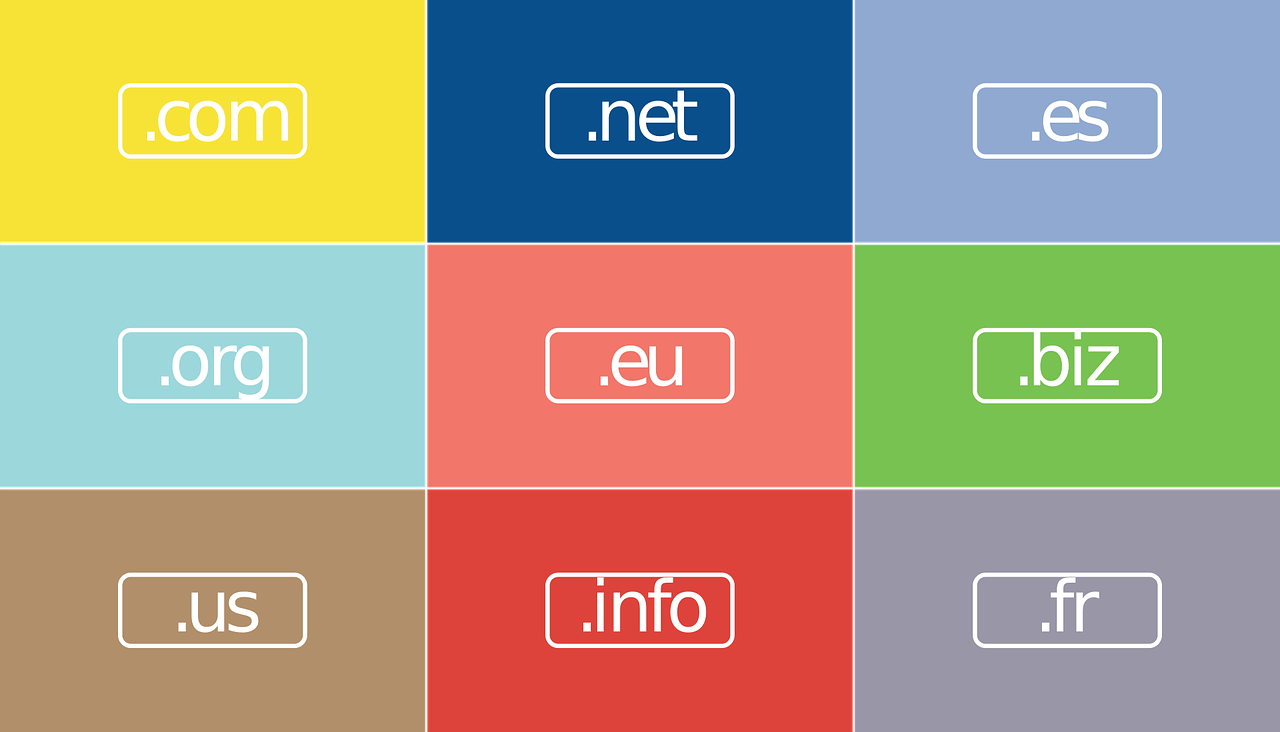
The ccTLD vs gTLD debate has been going on for a decade. Here is what is actually true.
What the extensions mean
A gTLD (generic top-level domain) has no geographic attachment: .com, .org, .net, .io, .app. Google does not associate them with any country by default.
A ccTLD (country-code top-level domain) is tied to a specific country: .uk, .de, .br, .fr. Each is managed by that country's registry, sometimes with local registration requirements.
There is a third category Google calls gccTLDs — country codes so widely adopted outside their home country that Google treats them as generic. The main ones: .io (British Indian Ocean Territory, now a tech standard), .ai (Anguilla, now shorthand for artificial intelligence), and .co (Colombia, used globally).
What Google actually said
In July 2023, Gary Illyes from Google's Search team put it plainly:
"If you have a .de, then for users in Germany, you would get a slight boost with your .de domain name."
And Martin Splitt added in 2024:
"If you are targeting a specific country and you can afford it, then usually it is helpful to pick your country top-level domain name."
So yes, ccTLDs do carry a local ranking signal. It is not a massive one, and you can replicate it with proper Search Console configuration on a gTLD, but it is real.
The key word here is local. This is a geographic signal, not a global ranking boost. A .de domain helps you in Germany. It does nothing for you anywhere else, and it can work against you when trying to rank in other countries.
When ccTLDs help vs. when they hurt
When ccTLDs help
Local businesses with a single market. A Munich restaurant on .de, a São Paulo law firm on .com.br, a London agency on .co.uk. These benefit from the automatic geo-signal with no extra configuration needed.
Markets where users actively trust local extensions. Research shows German and UK users prefer local TLDs over .com. In Brazil, .com.br carries strong trust with local consumers. In the US, .us is barely used at all — Americans default to .com regardless.
When ccTLDs hurt
Multi-market expansion. If you build authority on .fr and then want to rank in Spain or the US, that domain's geographic association becomes a liability. This is partly why Pinterest and Notion eventually migrated from a portfolio of ccTLDs to a single .com. The link equity consolidation drove measurable traffic gains.
Link equity fragmentation. Internal links between pages on the same domain pass more PageRank than links across different domains. Running example.de, example.fr, and example.es as separate domains means building three separate authority stacks from scratch. Under one .com with /de/, /fr/, /es/ subfolders, that authority compounds over time.
The gccTLD question (.io, .ai, .co)
Google treats these as gTLDs, so there is no geographic targeting by default. The SEO behavior is neutral, same as .com.
The risk with .io specifically: the British Indian Ocean Territory is subject to an ongoing territorial dispute. ICANN's handling of decommissioned ccTLDs is uncertain, and .io domains carry a long-term registry risk that .com simply does not. Worth knowing before you commit to it.
The practical decision
Targeting one country? Use the ccTLD if it is available and trusted locally. The geographic signal, even if small, is real and requires no setup.
Running a digital product across multiple countries? Go with .com. Set your target country in Search Console and use hreflang for language targeting.
Building a tech startup where .io or .ai fits the brand? The extension is fine for SEO today. Just be aware of the long-term registry risk.
Before you register, compare prices
Most people register their domain at the first registrar that shows up in Google. That often means paying double what they need to.
TecHub.digital/domains is a real-time domain price comparison tool. Type in the domain you want and see registration, renewal, and transfer prices side by side across major registrars. No account needed, no upsells.
If you are going to pay for a domain for the next several years, it is worth 30 seconds to compare.
Primary keywords: ccTLD vs gTLD SEO, domain extension SEO impact, country code domain ranking, gTLD vs ccTLD 2026, does domain extension affect Google ranking